

Your business and economy news reporter
Provided by AGP
Nanjing University of Information Science and Technology Study Reveals Evolving Summer Aerosol Pollution
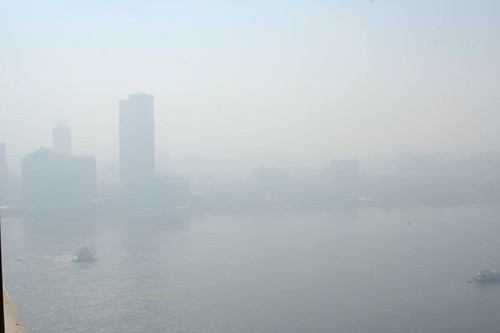
Fine particulate matter (PM1) pollution in summer over Nanjing is increasingly dominated by secondary aerosols formed through sunlight-driven photochemical reactions and humidity-dependent atmospheric chemistry, rather than direct emissions from traffic a
Researchers reveal the critical role of secondary species in heavier particulate matter pollution
BOSTON, MA, UNITED STATES, May 25, 2026 /EINPresswire.com/ -- Researchers in China studied summer PM1 pollution in Nanjing and found that it is now dominated (~70%) by secondary formation rather than direct emissions. Photochemical reactions drive sulfate and secondary organic aerosols, while humidity controls nitrate formation. They identified a transformation pathway from primary emissions to aged aerosols and showed that weather strongly influences pollution chemistry.Air pollution caused by fine particulate matter remains one of the world’s most serious environmental and public health challenges. Although China has achieved major reductions in PM2.5 pollution over the past decade through stricter emissions controls, scientists are increasingly finding that the composition of urban air pollution is changing. Instead of being dominated mainly by particles emitted directly from vehicles, industry, and combustion sources, modern summertime pollution is now increasingly driven by secondary pollutants formed through chemical reactions in the atmosphere.
A new study by Professor Xinlei Ge and his team at the Nanjing University of Information Science and Technology, China, has provided fresh insight into how these complex atmospheric processes shape air quality in one of China’s largest urban regions. The paper was made available online on March 27, 2025, in Volume 159, Issue 1 of the Journal of Environmental Sciences.
Prof. Ge and team conducted detailed measurements of submicron airborne particles (PM1) in Nanjing during the summer of 2022 using advanced real-time aerosol mass spectrometry. Their analysis focused on secondary organic aerosols, sulfate, nitrate, organic nitrogen compounds, organosulfates, and polycyclic aromatic hydrocarbons (PAHs), all of which influence air quality, climate, and human health.
The team found that secondary pollutants accounted for nearly 70% of the measured PM1 mass, demonstrating that atmospheric chemical reactions now play a dominant role in summer haze formation. Sunlight-driven photochemical reactions strongly promoted the formation of sulfate and secondary organic aerosols, while humid conditions favored nitrate formation.
“Our findings show that summer aerosol pollution is no longer controlled mainly by direct emissions,” said Prof. Ge. “Secondary chemical formation processes in the atmosphere have become increasingly important as primary particle emissions continue to decline.”
They identified two distinct types of secondary organic aerosols. One type formed rapidly during the early afternoon through fresh photochemical reactions, while the second represented more aged and oxidized particles that accumulated later in the day. The results suggest that primary organic particles emitted from traffic, cooking, and industrial activities can chemically transform into increasingly oxidized secondary aerosols as they age in the atmosphere.
The study also highlighted the different environmental conditions that control major pollutant species. Sulfate formation was strongly linked to photochemical oxidation under high sunlight conditions, whereas nitrate formation depended more heavily on humidity, heterogeneous reactions, and gas-to-particle partitioning processes. During cooler and more humid periods, nitrate concentrations increased substantially and contributed to heavier PM pollution episodes.
“Humidity and temperature can dramatically change the chemical pathways that dominate particulate pollution,” said lead author Yuanjie Shan. “This means pollution-control strategies may need to adapt dynamically to different weather conditions.”
The team also investigated several hazardous organic compounds. Organic nitrogen species were found to originate largely from traffic and industrial emissions, while organosulfates appeared to form mainly through weak aqueous-phase reactions under humid conditions. PAHs, which are associated with incomplete combustion and potential health risks, were primarily linked to vehicle emissions, especially diesel traffic.
Importantly, the researchers observed evidence that sunlight-driven oxidation may help remove PAHs from the atmosphere during afternoon hours, potentially converting them into secondary organic aerosol products.
“Our results suggest that reducing PM2.5 pollution will require more than simply lowering direct emissions,” Prof. Ge added. “Future mitigation efforts must also target the atmospheric chemistry that drives secondary aerosol formation.”
The findings provide new insight into how urban air pollution is evolving in rapidly developing regions and may help policymakers design more effective strategies for improving air quality and protecting public health.
Reference
Title of original paper: Chemical characteristics of fine aerosols and associated speciated organic compounds in summer Nanjing, China
Journal: Journal of Environmental Sciences
DOI: https://doi.org/10.1016/j.jes.2025.03.044
About the University
Nanjing University of Information Science and Technology (NUIST) is a nationally recognized university in China known for its strengths in atmospheric science, environmental research, information technology and engineering. Based in Nanjing, the university is committed to advancing scientific discovery and innovation while addressing global challenges related to climate, environment and sustainable development. Through world-class research, international collaboration and interdisciplinary education, NUIST supports the development of solutions that benefit society and improve understanding of the natural world.
Website: https://en.nuist.edu.cn/mainm.htm
About Professor Xinlei Ge
Xinlei Ge is a Professor of Atmospheric Chemistry affiliated with both Nanjing University of Information Science and Technology and Anhui Jianzhu University. His research focuses on aerosols, air pollution, and atmospheric processes, with particular interest in how airborne particles form and evolve in urban environments. Through field observations and advanced analytical techniques, his work contributes to improving air quality and understanding the environmental impacts of atmospheric pollution.
Funding information
This work was supported by the National Natural Science Foundation of China (grant numbers: 22361162668 and 42021004) and the National Key Research and Development Program of China (grant number: 2023YFC3706203).
Hanqin Tian
Boston College
+1 617-552-3664
hanqin.tian@bc.edu
Legal Disclaimer:
EIN Presswire provides this news content "as is" without warranty of any kind. We do not accept any responsibility or liability for the accuracy, content, images, videos, licenses, completeness, legality, or reliability of the information contained in this article. If you have any complaints or copyright issues related to this article, kindly contact the author above.
